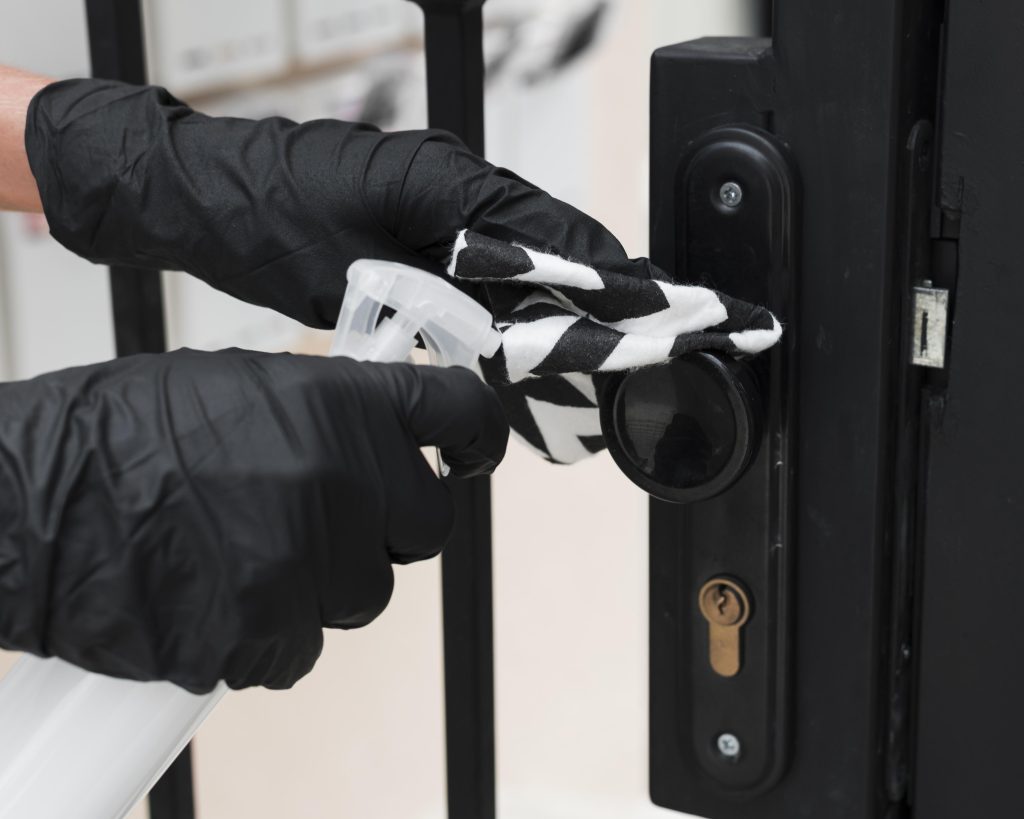
Short answer: almost always, yes. Longer answer: how they do it, how fast it happens, and whether your door ends up damaged in the process depends heavily on what kind of lock is sitting between you and your living room.
This is one of those questions people only think to ask after they are already standing outside, phone in hand, house key sitting on the kitchen counter. So here is what actually determines the outcome, explained before you need it.
Table of Contents
- ‣ The Short Version
- ‣ Why Most House Locks Are Openable Without Damage
- ‣ Where It Gets More Complicated
- ‣ What About the Door Itself, Not Just the Lock
- ‣ Verifying You Actually Live There
- ‣ When Drilling Actually Becomes Necessary
- ‣ What This Means for How Fast You Can Expect to Get Back In
- ‣ Frequently Asked Questions
The Short Version
A trained locksmith can open the vast majority of residential locks without destroying them, using tools designed to manipulate the internal mechanism rather than force it. Drilling or breaking a lock is treated as a last resort, not the default method, for any locksmith who values not creating extra work and expense for the homeowner.
Why Most House Locks Are Openable Without Damage
Standard residential deadbolts and doorknob locks use a pin tumbler mechanism. Inside the lock cylinder sits a row of small spring loaded pins, and the correct key pushes each one to exactly the right height so the cylinder can rotate. A locksmith using lock picks and a tension wrench is essentially replicating that same alignment manually, pin by pin, without needing the actual key.
This is not a party trick or a rare specialty skill among professional locksmiths, it is the everyday, bread and butter task of residential lockout service. Most calls of this type are resolved in a matter of minutes once the technician is on site.
Where It Gets More Complicated
Not every lock behaves the same way, and a few situations change the picture.
- High security residential locks: The kind with restricted keyways or additional anti-pick features are built specifically to resist standard picking methods. Opening these correctly takes more time, more specialized tools, and more experience, though it is still generally achievable for a locksmith who works with high security hardware regularly.
- Smart locks and electronic deadbolts: Introduce a different challenge entirely, since the obstacle is sometimes a dead battery or a software glitch rather than a mechanical one. In these cases, a locksmith may need to access a manual key override if the lock has one, or in rare cases the lock itself has to be removed and replaced if no override exists.
- Locks that have been damaged: Whether from a broken key stuck inside the cylinder, a worn out mechanism, or an attempted break in, sometimes cannot be opened cleanly no matter the method, because the internal parts themselves are no longer functioning correctly. In these situations, replacement rather than entry becomes the real job.
- Doors with multiple points of security: Such as a deadbolt plus a chain lock engaged from the inside, present a physical barrier that no amount of lock manipulation can solve, since the chain itself is not part of the lock mechanism at all.
What About the Door Itself, Not Just the Lock
People sometimes assume the lock is the only variable, but the door and frame matter too. A door that has swollen from humidity, a common issue in Florida homes, can stick even after the lock is successfully opened, which is a separate problem from the locking mechanism. A misaligned strike plate, often the result of a house settling over time, can also make a technically unlocked door feel stuck.
A good locksmith checks for these issues rather than assuming the lock alone is the obstacle, since forcing a swollen door can cause more damage than the lockout itself.
Verifying You Actually Live There
Any locksmith worth hiring will ask for identification and confirm you are the homeowner, a leaseholder, or otherwise authorized to be there before opening anything. This is not bureaucratic friction, it is a basic safeguard against helping the wrong person into someone else's home. If a technician skips this step entirely, that is a bigger red flag than any pricing concern.
When Drilling Actually Becomes Necessary
Drilling is sometimes framed as a scare tactic used by less scrupulous companies to justify a bigger bill, and that concern is not baseless. However, there are legitimate reasons drilling is the right call: a lock that has physically failed internally, a broken key fragment that cannot be extracted, or a security pin lock jammed beyond manual manipulation. A transparent locksmith explains the reasoning before drilling rather than jumping straight to it, and gives you the option to weigh in.
What This Means for How Fast You Can Expect to Get Back In
Assuming a standard residential lock in normal working condition, most house lockouts are resolved quickly once a technician arrives on site. A mobile locksmith who comes prepared can also cut a spare key for you on the spot once you are back inside, so the same situation is less likely to happen again. Our house lockout service page covers exactly what that visit includes, from entry to a working spare in hand.
Frequently Asked Questions
Will opening my door with lock picks damage the lock?
No, that is the entire point of the method. Non-destructive entry techniques are designed to leave the internal mechanism intact so the lock continues working normally afterward with the original key.
What if I do not have ID with me when the locksmith arrives?
A legitimate locksmith may still verify ownership through other means, such as mail addressed to the property or a neighbor confirming your identity, but expect some form of verification regardless.
Can a locksmith open a door if the key is broken off inside the lock?
Usually yes, using a broken key extractor tool designed for exactly this scenario, though in some cases the cylinder may need to be replaced afterward if the extraction damages the internal pins.
Are older homes harder for a locksmith to get into?
Not necessarily harder to unlock, but older hardware can be more worn, which sometimes means the lock needs replacement even after successful entry, simply because the mechanism is near the end of its usable life.
Does a locksmith need special permission to work on rental property doors?
Typically the leaseholder's authorization is sufficient, similar to homeownership verification, though some property management companies have their own procedures a locksmith may need to follow for units under their control.
Locked Out of Your Home?
Don't risk damaging your door or lock. Super Locksmith FL provides fast, professional, non-destructive entry services across Central Florida.
Call Us Today: 407-415-1588