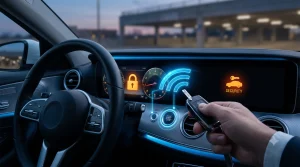
If you’ve ever glanced at your dashboard and seen an unfamiliar immobilizer warning light, or found yourself typing “what is an immobilizer” into a search bar at the worst possible moment, you’re looking into one of the quieter but more important pieces of technology sitting inside your car. It rarely gets attention when it’s working properly, which is exactly the point.
Here’s a full, plain language breakdown of how immobilizer systems work, why nearly every modern vehicle has one, and what to do when something goes wrong.
Table of Contents
- ‣ What Is an Immobilizer in a Car
- ‣ How an Engine Immobilizer System Works, Step by Step
- ‣ Common Reasons an Immobilizer Causes Problems
- ‣ Immobilizer Versus Car Alarm: What’s the Difference
- ‣ Why Immobilizers Changed Vehicle Theft
- ‣ What to Do if You Suspect an Immobilizer Problem
- ‣ A Note on Getting a New Key Programmed
- ‣ Locked Out by Your Own Immobilizer?
- ‣ Frequently Asked Questions
What Is an Immobilizer in a Car
An immobilizer, sometimes spelled immobiliser, is an electronic security system built to prevent a car’s engine from starting unless it detects a valid, authorized key nearby. Every immobilizer equipped key contains a small chip called a transponder, embedded inside the plastic housing of the key or fob. When that key is inserted into the ignition or held near a start button, the car’s onboard computer checks the transponder’s unique code against a list of authorized codes stored in the vehicle. If the codes match, the engine is free to start normally. If they don’t match, or if no valid signal is detected at all, the immobilizer quietly blocks fuel delivery, ignition, or the starter motor, and the car simply refuses to run.
This single feature is a big part of why hot wiring a modern vehicle, something that used to be a fairly common theft method decades ago, has become nearly impossible. Even if someone manages to bypass the steering column lock entirely, the vehicle immobilizer system stands in the way and prevents the engine from actually turning over.
How an Engine Immobilizer System Works, Step by Step
The process happens in a fraction of a second, but it involves a handful of distinct components working together.
- The key transponder is the small chip inside your key or fob that transmits a unique identifying code over a short range radio frequency.
- The vehicle’s receiver antenna, usually positioned around the ignition cylinder or nearby, picks up that signal the moment the key comes close enough.
- The immobilizer control unit takes that received code and compares it against the list of codes the vehicle recognizes as valid.
- The engine control unit only allows fuel injection and ignition to proceed once it receives confirmation that the key checks out.
If any single link in that chain fails, whether it’s a damaged transponder, a receiver with a wiring issue, or simply an unrecognized key, the automotive immobilizer system will prevent the engine from starting, even if the physical key turns smoothly in the ignition.
Common Reasons an Immobilizer Causes Problems
- An immobilizer warning light staying on is often traced back to something surprisingly minor, like a low key battery, a slightly damaged transponder chip, or a replacement key that was cut correctly but never actually programmed into the vehicle’s system.
- A car that won’t start despite what seems like a perfectly good key can point to a receiver antenna issue or a communication error somewhere between the immobilizer control unit and the engine control unit.
- A recently replaced key that hasn’t been paired with the vehicle is one of the most common causes of all. Cutting a new key so it physically fits the ignition is only half the job. A locksmith or dealership still has to program that key’s transponder chip into the car’s system before the immobilizer will accept it, which is why a freshly cut spare sometimes turns the ignition but never actually starts the engine.
- Water or physical damage to the fob can corrupt the internal transponder chip, sometimes intermittently, which leads to a frustrating pattern where the key works most of the time but occasionally fails without warning.
Immobilizer Versus Car Alarm: What’s the Difference
These two systems are related but serve very different purposes. A car alarm is designed to alert everyone nearby, using sound and flashing lights, when it detects a break in attempt. An immobilizer, on the other hand, works completely silently in the background. It doesn’t need to make noise because its entire job is to physically prevent the engine from starting in the first place, regardless of whether anyone hears an alarm or not. Most modern vehicles run both systems together, combining a loud deterrent with a quiet mechanical safeguard.
Why Immobilizers Changed Vehicle Theft
Since becoming standard equipment on the majority of new vehicles, immobilizer systems have been widely credited with driving down theft rates tied to hot wiring and simple lock picking. A thief who once could have started a car with little more than a screwdriver and some patience now faces a system that simply won’t cooperate without the correct chip present. This shift pushed vehicle theft methods toward more sophisticated approaches, like signal relay attacks on keyless entry systems, which is a separate topic entirely from the classic immobilizer.
What to Do if You Suspect an Immobilizer Problem
If your car won’t start and an immobilizer issue seems likely, there are a few steps worth trying before assuming the worst.
- Try your spare key first, since if it starts the car without issue, the problem likely lies with your primary key’s chip rather than the vehicle itself.
- Check the fob’s battery, since a weak battery can sometimes prevent the transponder from transmitting clearly enough to be read.
- Avoid repeatedly turning the key over and over, since some systems introduce a temporary lockout after several failed attempts as an added security measure.
- Call a professional automotive locksmith who has the tools to properly diagnose whether the issue involves the key, the receiver, or the programming itself, rather than guessing and potentially making the situation more complicated.
A Note on Getting a New Key Programmed
Because immobilizer programming is specific to each individual vehicle, it isn’t something that can be done with a generic key cutting machine alone. A professional locksmith has to program that key’s transponder chip directly to your car’s unique immobilizer codes, a process that typically requires specialized diagnostic equipment. This is why simply having a spare key cut at a hardware store kiosk usually isn’t enough for a modern vehicle. The key might fit the lock perfectly and still fail to start the engine, since fitting the lock and satisfying the immobilizer are two completely separate requirements.
Locked Out by Your Own Immobilizer? Super Locksmith FL Can Help
Super Locksmith FL provides on site immobilizer diagnostics, key programming, and transponder key replacement for a wide range of makes and models throughout Florida. We come directly to you, so you’re not stuck waiting on a tow truck or a lengthy dealership appointment just to get your car recognizing its own key again.
If your immobilizer light is on and your car won’t start, reach out to Super Locksmith FL for fast, mobile diagnostics and key programming.
Frequently Asked Questions
Can a car start with a key that fits but isn’t programmed?
No. The physical shape of the key only handles the mechanical side of unlocking or turning the ignition. The immobilizer system separately checks the transponder chip’s code, and without proper programming, the engine will not start even if the key turns smoothly.
Does every modern car have an immobilizer?
The vast majority of vehicles built in recent decades include some form of immobilizer as standard equipment, since it became a widely adopted anti theft standard across the auto industry.
Why does my immobilizer light flash instead of staying solid?
A flashing immobilizer light typically indicates the system is actively failing to recognize a valid key signal, often due to a weak fob battery, interference, or a key that isn’t properly paired with the vehicle.
Can I bypass or disable my car’s immobilizer?
This isn’t something we’d recommend attempting, since the immobilizer exists specifically to protect the vehicle from theft, and disabling it can create both security risks and further mechanical complications. A locksmith can properly diagnose and fix the underlying issue instead.
How is an immobilizer different from a basic car alarm?
An alarm is meant to be heard, alerting people nearby to a break in attempt with sound and lights. An immobilizer works silently and simply prevents the engine from starting at all, regardless of whether anyone notices an attempted theft in progress.
Immobilizer Issues? We’ve Got You Covered
Call Super Locksmith FL today. We will diagnose your immobilizer issue and program a new key on site, bypassing the need for an expensive dealership visit.
Call Us Today: 407-415-1588